
How to Build an Emergency Fund in 12 Months Easy Steps for Financial Security
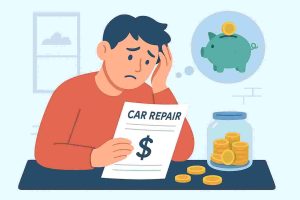
Picture this: your car breaks down on a Tuesday morning, and the repair bill is $1,200. For many people, this unexpected expense means choosing between putting it on a credit card or scrambling to borrow money from family. But what if you could handle this situation without breaking a sweat? That’s the power of an emergency fund.
Building an emergency fund might seem impossible when you’re already stretched thin financially, but with the right plan, you can create a solid financial safety net in just 12 months. I’ve seen countless people transform their financial stress into confidence by following a systematic approach to emergency savings.
The truth is, most Americans can’t cover a $1,000 emergency without borrowing money. If you’re reading this, you’re already ahead of the game because you’re taking action. Let me walk you through exactly how to build your emergency fund step by step, even if you’re starting from zero.
Understanding Emergency Funds and Why You Need One
What is an Emergency Fund and How Much Should You Save
An emergency fund is money you set aside specifically for unexpected expenses that could disrupt your financial stability. Think of it as insurance for your budget – money that sits there waiting for true emergencies, not everyday purchases or planned expenses.
The traditional advice is to save 3-6 months of living expenses, but this one-size-fits-all approach doesn’t work for everyone. If you have a stable job with good benefits, three months might be enough. If you’re self-employed or work in an unstable industry, you might need six months or more.
Here’s how to calculate your specific target:
- Add up all your essential monthly expenses (rent, utilities, groceries, minimum debt payments, insurance)
- Multiply by 3-6 depending on your job stability and family situation
- Consider your insurance coverage – better health and disability insurance means you might need less
For example, if your essential monthly expenses are $3,000 and you want four months of coverage, your emergency fund goal would be $12,000. This might sound overwhelming, but remember – you have 12 months to build it, which means saving $1,000 per month.
Real Emergencies vs. Everyday Expenses: Drawing the Line
One of the biggest mistakes people make is raiding their emergency fund for things that aren’t actually emergencies. I learned this the hard way when I first started building my emergency fund. I’d save $500, then use it for holiday gifts because “it was an emergency that I forgot to budget for it.”
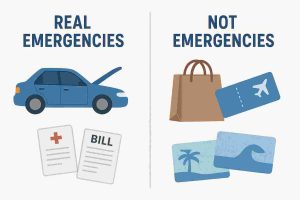
True emergencies include:
- Job loss or significant income reduction
- Major medical expenses not covered by insurance
- Essential home repairs like a broken furnace or leaking roof
- Car repairs needed to get to work
- Family emergencies requiring travel
Not emergencies:
- Vacations, even if you “really need a break”
- Holiday gifts and birthday presents
- Home improvements and decorating
- New clothes for a special event
- Electronics that break but aren’t essential.
The key is asking yourself: “Is this expense unexpected, necessary, and urgent?” If any answer is no, find another way to pay for it. Creating separate savings accounts for known expenses like gifts and vacations helps protect your emergency fund from temptation.
The Financial and Emotional Benefits of Emergency Preparedness
Having an emergency fund does more than protect your bank account – it protects your peace of mind. Before I had emergency savings, every unexpected expense felt like a crisis. The stress of wondering how I’d pay for car repairs or medical bills was exhausting.

Financial benefits include:
- Avoiding high-interest credit card debt during emergencies
- Preventing the need to withdraw from retirement accounts early
- Maintaining your credit score by avoiding missed payments
- Having negotiating power in emergencies (paying cash often gets discounts)
The emotional benefits are just as important:
- Reduced anxiety about unexpected expenses
- Better sleep knowing you’re prepared for financial surprises
- Increased confidence in your overall financial plan
- Freedom to make career decisions without fear of financial ruin
When my friend Sarah lost her job unexpectedly, she told me her emergency fund gave her the luxury of time. Instead of taking the first job offer out of desperation, she could be selective and find a position that was actually better than her previous one.
Assessing Your Current Financial Situation
Taking Stock of Your Income, Expenses, and Existing Savings
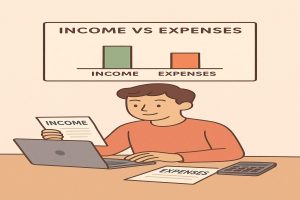
Before you can build an emergency fund, you need to know exactly where you stand financially. Gather your bank statements, pay stubs, and any existing savings account information. This might feel overwhelming, but knowledge is power when it comes to money.
Start by calculating your true monthly income:
- Your take-home pay from your primary job
- Income from side jobs or freelance work
- Regular payments from investments or rental properties
- Any other consistent monthly income
Be conservative here – if your income varies, use the lower end of your typical range. It’s better to underestimate your income and exceed your savings goals than to be overly optimistic and fall short.
Next, look at your current savings situation. Do you have money in checking accounts beyond what you need for monthly expenses? Any savings accounts, even if they’re designated for other purposes? Money market accounts or certificates of deposit? This gives you your starting point.
Identifying Monthly Expenses and Creating a Baseline Budget
Now comes the part that surprises most people – figuring out where your money actually goes. We often think we know our spending patterns, but bank statements tell the real story.
Fixed expenses are easy to identify:
- Rent or mortgage payments
- Insurance premiums
- Loan payments
- Subscription services
- Utilities (though these can vary)
Variable expenses require more detective work:
- Groceries and dining out
- Gas and transportation costs
- Entertainment and hobbies
- Personal care items
- Clothing and household items
I recommend tracking expenses for at least one month, but preferably three, to get an accurate picture. Many banking apps categorize spending automatically, making this easier than it used to be. Don’t judge yourself during this process – you’re gathering information, not making changes yet.
Finding Your Starting Point: How Much Can You Realistically Save
Once you know your income and expenses, you can see how much money is available for emergency fund contributions. Subtract your total monthly expenses from your monthly income. The difference is your potential savings amount.
If this number is negative, don’t panic – you’re not alone. This means you’ll need to focus more on reducing expenses or increasing income before you can build a substantial emergency fund. Even saving $25 per month is better than saving nothing.
If you have money left over, resist the urge to commit every penny to emergency savings. Life happens, and being too aggressive with your savings goals often leads to failure. Start with 50-70% of your available money for emergency savings, leaving room for occasional overspending or unexpected small expenses.
For example, if you have $400 left over each month after expenses, commit $250-300 to your emergency fund. This gives you a buffer while still making solid progress toward your goal.
Creating Your 12-Month Emergency Fund Strategy
Setting Monthly Savings Targets and Milestones
Breaking your emergency fund goal into monthly targets makes it feel achievable rather than overwhelming. If your goal is $12,000, saving $1,000 per month sounds much more manageable than thinking about the full amount.
Create quarterly milestones to track your progress:
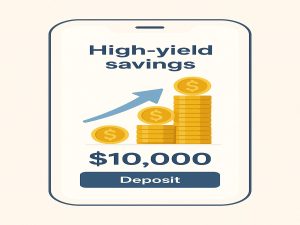
- Month 3: $3,000 saved
- Month 6: $6,000 saved
- Month 9: $9,000 saved
- Month 12: $12,000 saved (goal reached!)
Build flexibility into your plan because life rarely goes exactly as expected. Maybe you’ll have months where you can save more and months where you save less. The key is staying committed to the overall goal while adapting to reality.
Consider seasonal variations in your budget. Many people spend more during holidays or summer months. Plan for these variations by saving extra during typically lower-expense months to balance out the higher-spending times.
Choosing the Right Savings Account for Your Emergency Fund
Your emergency fund needs to be easily accessible but separate from your everyday spending money. This rules out investments like stocks or long-term certificates of deposit, but gives you several good options.
High-yield savings accounts are usually the best choice:
- Easy access to your money when needed
- Better interest rates than traditional savings accounts
- FDIC insurance protects your deposits
- Can be kept at a different bank from your checking account
Money market accounts offer similar benefits with potentially slightly higher interest rates, but may require higher minimum balances. Some also come with check-writing privileges, which can be convenient for large emergency expenses.
Avoid keeping your emergency fund in:
- Your regular checking account (too easy to spend accidentally)
- Investment accounts (values can drop when you need the money)
- Certificates of deposit with withdrawal penalties
- Accounts that are difficult to access quickly
Automating Your Savings to Stay on Track
The most successful emergency fund builders automate their savings so it happens without requiring willpower or remembering to make transfers. Set up an automatic transfer from your checking account to your emergency savings account that happens right after you get paid.
Timing matters. Schedule the transfer for 1-2 days after your paycheck hits your account. This ensures the money is available for transfer but gets moved before you have a chance to spend it on other things.
Consider using a different bank for your emergency fund. This creates a small barrier to accessing the money impulsively while still keeping it available for true emergencies. Online banks often offer higher interest rates than traditional banks, making this strategy even more beneficial.
If your income is irregular, automate smaller weekly transfers instead of monthly ones. This helps smooth out the variations in your cash flow while still making consistent progress toward your goal.
Finding Extra Money in Your Budget
Cutting Unnecessary Expenses Without Sacrificing Quality of Life
The goal isn’t to make yourself miserable – it’s to find expenses that don’t add much value to your life and redirect that money toward your emergency fund. Start with the easy wins that won’t significantly impact your daily routine.
Review all your subscriptions and memberships:
- Streaming services you rarely use
- Gym memberships if you consistently work out at home
- Magazine or app subscriptions you forgot about
- Multiple music or video services that overlap
Look at your recurring bills for optimization opportunities:
- Call your insurance company to review your rates
- Switch to a cheaper cell phone plan or carrier
- Negotiate with your internet and cable providers
- Review your utility providers if you have choices in your area
Small changes add up quickly. Canceling a $15 streaming service and reducing your phone bill by $20 saves $420 per year – that’s more than a month’s worth of emergency fund contributions for many people.
Optimizing Your Largest Budget Categories
Since housing, transportation, and food typically make up 60-70% of most budgets, small percentage improvements in these areas create big savings.
Housing optimization strategies:
- Refinance your mortgage if rates have dropped
- Consider taking in a roommate or renting out a spare room
- Appeal your property tax assessment if your home value has decreased
- Make energy efficiency improvements to reduce utility costs
Transportation savings opportunities:
- Walk, bike, or use public transit when possible
- Carpool to work or social events
- Keep up with car maintenance to avoid major repairs
- Consider whether you actually need multiple cars
Food budget improvements:
- Plan meals around sales and seasonal produce
- Cook larger portions and eat leftovers for lunch
- Reduce dining out frequency without eliminating it entirely
- Buy generic brands for items where you don’t notice a quality difference
The 50/30/20 Rule and Other Budgeting Methods for Emergency Savings
The 50/30/20 rule suggests spending 50% of your after-tax income on needs, 30% on wants, and 20% on savings and debt payments. While building your emergency fund, consider temporarily adjusting this to 50/20/30, putting the extra 10% toward your emergency savings.
Zero-based budgeting assigns every dollar a specific purpose before you spend it. This method works well for emergency fund building because it forces you to prioritize savings alongside your other expenses.
The envelope method uses cash for variable spending categories like groceries and entertainment. When the cash is gone, you’re done spending in that category for the month. This prevents overspending and often results in money left over for emergency savings.
Try different methods to see what works for your personality and lifestyle. The best budgeting system is the one you’ll actually follow consistently.
Increasing Your Income to Accelerate Savings
Maximizing Your Primary Income Through Career Development
Your job is likely your biggest source of income, so focusing on career growth can have the most significant impact on your emergency fund building timeline. Many people underestimate their ability to increase their primary income.
Timing matters when asking for raises. Don’t wait for your annual review – schedule a meeting specifically to discuss your compensation after you’ve completed a successful project or taken on new responsibilities.
Prepare for salary negotiations:
- Research market rates for your position and experience level
- Document your accomplishments and additional responsibilities
- Practice your pitch with a trusted friend or family member
- Ask for specific amounts rather than general increases
Look for skill development opportunities that directly translate to higher pay:
- Industry certifications that are valued by your employer
- Software skills that make you more efficient
- Leadership training if you want to move into management
- Cross-training in other departments to increase your value
Sometimes the fastest way to increase income is changing jobs entirely. The average salary increase from job switching is 10-20%, compared to 3-5% for annual raises at the same company.
Starting Side Businesses and Freelance Work
Side income doesn’t have to mean starting a complex business. Focus on services you can provide with skills you already have, requiring minimal startup costs.
Popular side income ideas:
- Freelance writing or editing
- Tutoring or teaching skills you’re good at
- Pet sitting or dog walking
- Handyman services or home organization
- Selling handmade items or baked goods
Online platforms make finding freelance work easier than ever:
- Upwork and Fiverr
- vr for various professional services
- TaskRabbit for local tasks and services
- Uber or DoorDash for flexible driving opportunities
- Etsy for selling handmade or vintage items
Start small and focus on one income stream before adding others. It’s better to do one thing well than to spread yourself too thin across multiple poorly-executed side hustles.
Selling Unused Items and Optimizing Your Possessions
Most people have hundreds or thousands of dollars worth of unused items in their homes. This one-time income boost can jump-start your emergency fund significantly.
Valuable items often hiding in closets:
- Electronics you’ve upgraded from
- Exercise equipment you don’t use
- Designer clothing or accessories
- Books, especially textbooks or professional development materials
- Tools or hobby equipment for abandoned interests
Different selling strategies work for different items:
- Facebook Marketplace and Craigslist for furniture and large items
- eBay for collectibles and items with national appeal
- Poshmark and ThredUp for clothing
- Amazon for books and electronics
- Consignment shops for designer items
Price items to sell, not to maximize profit. The goal is converting unused possessions into emergency fund money, not running a retail business. Price competitively and be willing to negotiate to move items quickly.
Summary
Building an emergency fund in 12 months requires a clear understanding of your financial goals, honest assessment of your current situation, and systematic approach to both reducing expenses and increasing income. The key to success lies in automating your savings, setting realistic monthly targets, and consistently finding ways to optimize your budget without sacrificing your quality of life.
Start by calculating exactly how much you need to save and break it into monthly goals that feel achievable. Choose a high-yield savings account that’s separate from your daily banking but easily accessible for emergencies. Automate your savings so building your fund happens consistently without relying on willpower.
Look for money in your current budget by cutting expenses that don’t add value to your life and optimizing your largest spending categories. Consider ways to increase your income through career development, side work, or selling unused possessions.
Remember that building an emergency fund is a marathon, not a sprint. Some months you’ll save more than planned, others less. The important thing is maintaining consistent progress toward your goal. By following this structured approach and staying committed to your timeline, you can create a robust financial safety net that provides both practical protection and peace of mind for years to come.
Your future self will thank you for taking action today. Every dollar you save brings you closer to financial security and the confidence that comes with being prepared for whatever life throws your way.
Frequently Asked Questions
Q: What if I can’t save the full 3-6 months of expenses in 12 months?
A: Start with a smaller goal like $1,000 or one month of expenses. Any emergency fund is better than none, and you can continue building it beyond the 12-month timeline. The important thing is developing the habit of consistent saving and having some protection against unexpected expenses.
Q: Should I focus on paying off debt or building an emergency fund first?
A: Build a small emergency fund of $500-1,000 first, then focus on high-interest debt, then return to building your full emergency fund to avoid borrowing during emergencies. This approach prevents you from going deeper into debt when unexpected expenses arise while you’re paying off existing debt.
Q: Where should I keep my emergency fund money?
A: Keep it in a high-yield savings account or money market account that offers easy access without penalties, separate from your regular checking account to avoid accidental spending. Online banks often offer better interest rates than traditional banks while still providing FDIC insurance protection.
Q: Can I invest my emergency fund in stocks or mutual funds?
A: No, emergency funds should be kept in liquid, low-risk accounts. Stock investments can lose value when you need the money most, defeating the purpose of emergency preparedness. The goal is preservation and accessibility, not growth.
Q: What constitutes a real emergency that justifies using these funds?
A: Job loss, major medical expenses, essential home repairs, car repairs needed for work